August 13th 2025, 6:40 am
AI Workflows for Demand Forecasting and Inventory Optimization
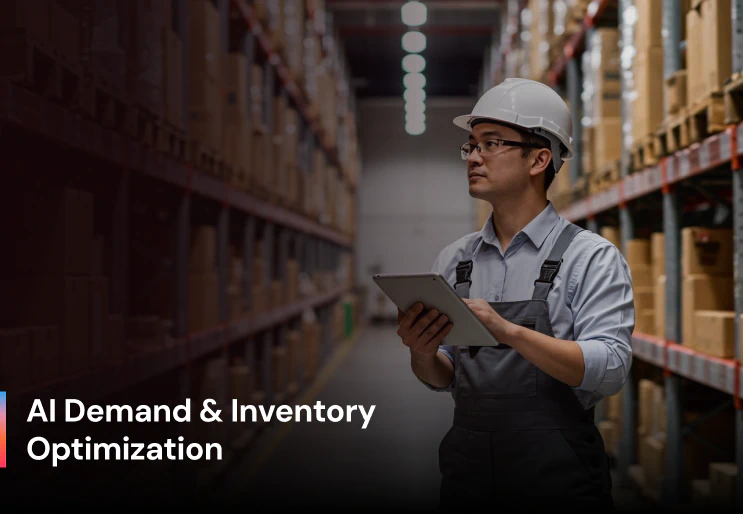
Supply chain disruptions, shifting consumer demands, and global volatility have made traditional forecasting models obsolete. Businesses are now seeking agile, data-driven systems that can sense demand signals in real time and dynamically adjust inventory decisions.
That’s where AI-powered workflows come in, offering a smarter way to manage stock levels, reduce overstock and stockouts, and optimize end-to-end inventory planning.
The Need for Smarter Demand Forecasting
Conventional forecasting models often rely on historical data alone and fail to account for real-world variability such as:
- Seasonal trends and promotional events
- Shifts in consumer behavior
- Regional demand fluctuations
- External signals (e.g., weather, news, social media)
AI workflows bring context-aware intelligence by combining historical patterns with real-time signals, generating far more accurate and adaptive forecasts.
What Are AI Workflows in Inventory Management?
AI workflows are orchestrated sequences of AI models, data pipelines, and decision agents that work together to forecast demand and recommend optimal stock levels. Key components include:
Data Ingestion & Normalization
Ingest structured and unstructured data from POS systems, ERP, supplier portals, market feeds, and IoT devices.
Predictive Demand Models
Use machine learning models (e.g., time series, regression, neural nets) trained on product/category/location-level data to predict future demand.
Intelligent Agents
Decision-making agents analyze model outputs and recommend reorder points, safety stock levels, and distribution planning actions.
Dynamic Feedback Loop
Inventory decisions and outcomes (e.g., sell-through, stockouts) are fed back into the system to continuously improve model accuracy.
The Future: Agentic, Autonomous Supply Chains
AI workflows are paving the path to agentic supply chains systems that sense, plan, and act with minimal human intervention. As AI agents grow more collaborative and self-learning, they’ll not just recommend actions but autonomously adjust pricing, logistics, and stock allocations in response to real-world demand changes.
The result? Resilient, intelligent, and responsive inventory ecosystems are ready for any disruption.