✨ We’ve rebranded! AIRA is now Amantra ✨

Automating Returns Management in Retail: Turning a Pain Point into a Competitive Edge

Returns are an unavoidable part of retail, especially in the era of e-commerce, omnichannel shopping, and customer-centric policies. But while convenient return processes can boost customer loyalty, they also introduce logistical, financial, and operational challenges. Manual returns handling often leads to inventory mismatches, delayed refunds, unhappy customers, and lost revenue.

With the power of intelligent automation and Agentic AI, retailers can transform returns management from a reactive cost center into a proactive, streamlined, and insight-driven function.


Why Returns Management Needs a Rethink

Returns management is more than just handling items that come back—it includes:

  • Return initiation across multiple channels
  • Logistics coordination with warehouses and couriers
  • Condition assessment and restocking
  • Refund or exchange processing
  • Inventory and financial system updates

Traditional approaches to managing this lifecycle are disjointed and labor-intensive. For retailers handling thousands of SKUs and orders daily, this can cause backlogs, data errors, and customer dissatisfaction.


Enter Automation: A Game-Changer for Retail Returns


By leveraging AIRA’s Agentic Automation Platform, retailers can create autonomous workflows that intelligently manage returns at scale. Here’s how:

1. Automated Return Initiation and Validation

Customers can initiate returns via self-service portals or AI-powered chatbots. AIRA’s conversational AI agents validate return eligibility in real-time based on product condition, return windows, and purchase history.


2. Seamless Workflow Orchestration

AIRA automates the routing of return requests to the right warehouse or department. It also instantly updates order management and ERP systems, ensuring real-time inventory accuracy and faster turnaround.


3. Smart Document Processing

With Intelligent Document Processing (IDP), return labels, receipts, and item condition reports are automatically extracted, verified, and processed without human intervention.


4. Exception Handling with Agentic AI

Agentic AI enables autonomous agents to detect anomalies (e.g., fraud attempts, mismatched items, repeat returners) and escalate or resolve them independently, reducing manual review efforts.


5. Refund and Exchange Automation

AIRA triggers refunds or exchanges once validation is complete, without delay, enhancing customer trust and satisfaction.


Why AIRA for Retail Returns Automation?

At AIRA, we go beyond basic automation. Our agentic approach enables self-driven bots that collaborate with systems, teams, and customers, making intelligent decisions and continuously learning. This allows retailers to:

  • Scale operations during peak seasons
  • Offer personalized return experiences
  • Reduce return abuse with AI-led fraud detection
  • Achieve real-time integration across ERP, WMS, and CRM systems


Future-Proofing Retail with Autonomous Returns Management

In a competitive retail landscape, how you manage returns can define how customers perceive your brand. By embracing automation and Agentic AI, retailers can make returns management faster, smarter, and frictionless, turning a traditional burden into a strategic differentiator.

Let AIRA help you automate the full returns lifecycle so you can focus on what matters most: serving your customers better.

Transparent Auditing with AI-Powered Financial Reconciliation

Financial reconciliation is a critical function in every enterprise, ensuring that internal records align with external statements, whether from banks, vendors, or regulators. However, traditional reconciliation methods are manual, time-consuming, error-prone, and difficult to audit.

Enter AI-powered financial reconciliation, a transformative approach that uses intelligent automation and real-time data validation to deliver faster, more accurate, and fully auditable financial processes.


The Problem with Traditional Reconciliation

Even today, many finance teams struggle with:

  • Manual data entry across disparate systems
  • Siloed reconciliation logs and exception handling
  • Delayed month-end close cycles
  • Limited visibility into exception trends or anomalies
  • Incomplete audit trails

This results in operational inefficiencies, compliance risks, and unnecessary overhead.

What Is AI-Powered Financial Reconciliation?

AI-powered reconciliation combines real ai, rule-based and learning-based matching, and audit-ready exception workflows to automate the end-to-end reconciliation lifecycle.

Key Capabilities:

  1. Automated Data Ingestion: Pulls data from ERP systems, bank statements, invoices, and payment gateways.

  2. Smart Matching Engines: Uses AI to reconcile transactions across formats, even when fields are inconsistent, missing, or unstructured.

  3. Exception Handling with Agentic AI: Automatically flags mismatches and routes them to human approvers with context-aware recommendations.

  4. Audit Trails and Change Logs: Maintains a transparent, immutable log of all reconciliation actions, changes, approvals, and timestamps.

  5. Real-Time Dashboards & Analytics: Displays live reconciliation status, pending actions, exception categories, and trends across periods.


How It Works in Practice

Let’s say your bank statement shows a debit of ₹1,20,000, but your internal ledger shows a split payment of ₹70,000 and ₹50,000 on two separate days. Traditional systems would flag this as a mismatch. AI-powered systems can:

  • Cluster-related transactions using context-aware rules
  • Match them based on dates, references, vendors, and narrative similarity
  • Route for human validation only when confidence scores are low
  • Log the decision and learning for future automation

The Future: Autonomous Financial Assurance

With agentic AI at the core, reconciliation systems can evolve beyond matching records; they become autonomous financial assurance engines that:

  • Detect fraud and anomalies in real time
  • Learn from historical resolution patterns
  • Interact with auditors through natural language dashboards
  • Trigger early warnings and compliance alerts proactively

This not only strengthens financial integrity but also increases confidence among stakeholders from internal auditors to regulators and board members.

Real-Time Shipment Visibility with AI-Driven Dashboards

In today’s global economy, logistics and supply chains are more complex than ever. Companies operate across multiple geographies, time zones, and transportation modes. Yet, many still rely on siloed tracking systems, spreadsheets, and manual coordination, leading to shipment delays, lost inventory, and frustrated customers.

That’s where AI-driven shipment visibility dashboards come in. By integrating real-time data, predictive analytics, and intelligent alerts, these dashboards provide a 360° view of shipments, empowering logistics teams to monitor, react, and optimize deliveries in real time.


Why Shipment Visibility Matters

Poor shipment visibility can result in:

  • Missed delivery windows
  • Excess inventory buffers
  • Reactive rather than proactive decisions
  • Inability to communicate delays to customers
  • High logistics and penalty costs

Real-time visibility isn’t just about tracking, it’s about predicting and preventing disruptions before they impact business operations.


What Is an AI-Driven Shipment Visibility Dashboard?

An AI-driven dashboard combines live shipment tracking with intelligent workflows. It typically includes:

  1. Live Location Tracking: Integrates GPS, IoT devices, carrier APIs, and warehouse systems to show where shipments are across land, air, or sea.
  2. Predictive ETA and Delay Alerts: AI models analyze historical transit times, weather data, and current route conditions to predict delivery delays before they happen.
  3. Intelligent Risk Scoring: AI agents assign risk scores to shipments (e.g., “high chance of customs delay”) based on cargo type, route, and events.
  4. Unified Dashboard View: Customizable views for logistics managers, customer service reps, or partners filtered by shipment ID, region, carrier, etc.
  5. Automated Alerts & Workflows: Trigger automated alerts or escalation workflows if delays, route changes, or damage are detected.

The Future: Autonomous Logistics Coordination

The next phase of visibility isn’t just seeing what’s happening; it’s acting on it autonomously. With agentic AI, logistics platforms can:

  • Re-route shipments dynamically
  • Auto-negotiate with carriers for delays
  • Adjust downstream production or delivery plans
  • Trigger automated customer communication flows

This shift toward autonomous logistics coordination will turn reactive supply chains into proactive, self-healing systems.


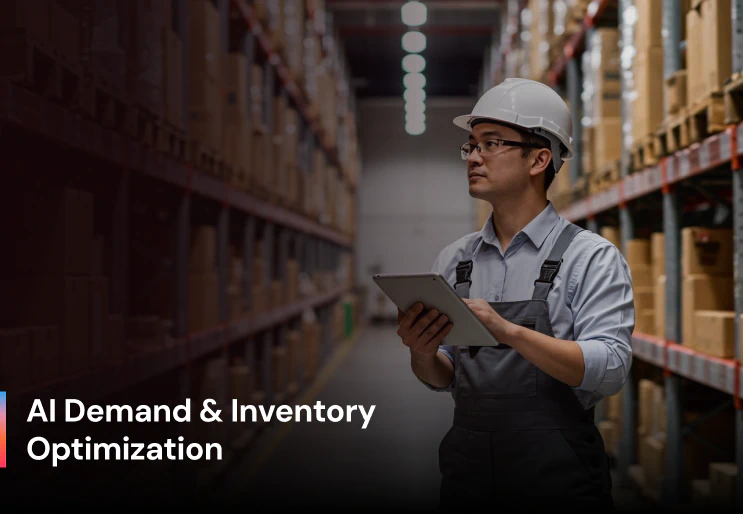
AI Workflows for Demand Forecasting and Inventory Optimization

Supply chain disruptions, shifting consumer demands, and global volatility have made traditional forecasting models obsolete. Businesses are now seeking agile, data-driven systems that can sense demand signals in real time and dynamically adjust inventory decisions.

That’s where AI-powered workflows come in, offering a smarter way to manage stock levels, reduce overstock and stockouts, and optimize end-to-end inventory planning.

The Need for Smarter Demand Forecasting

Conventional forecasting models often rely on historical data alone and fail to account for real-world variability such as:

  • Seasonal trends and promotional events
  • Shifts in consumer behavior
  • Regional demand fluctuations
  • External signals (e.g., weather, news, social media)

AI workflows bring context-aware intelligence by combining historical patterns with real-time signals, generating far more accurate and adaptive forecasts.


What Are AI Workflows in Inventory Management?

AI workflows are orchestrated sequences of AI models, data pipelines, and decision agents that work together to forecast demand and recommend optimal stock levels. Key components include:

Data Ingestion & Normalization

Ingest structured and unstructured data from POS systems, ERP, supplier portals, market feeds, and IoT devices.

Predictive Demand Models

Use machine learning models (e.g., time series, regression, neural nets) trained on product/category/location-level data to predict future demand.

Intelligent Agents

Decision-making agents analyze model outputs and recommend reorder points, safety stock levels, and distribution planning actions.

Dynamic Feedback Loop

Inventory decisions and outcomes (e.g., sell-through, stockouts) are fed back into the system to continuously improve model accuracy.


The Future: Agentic, Autonomous Supply Chains


AI workflows are paving the path to agentic supply chains systems that sense, plan, and act with minimal human intervention. As AI agents grow more collaborative and self-learning, they’ll not just recommend actions but autonomously adjust pricing, logistics, and stock allocations in response to real-world demand changes.

The result? Resilient, intelligent, and responsive inventory ecosystems are ready for any disruption.

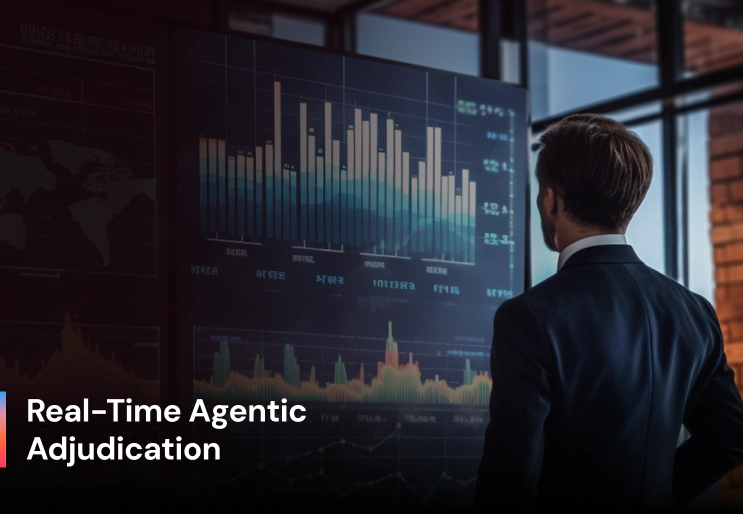
Real-Time Claims Processing with Agentic Adjudication Engines

Delays, manual reviews, paperwork, and back-and-forth correspondence have long slowed traditional insurance claims processing. These inefficiencies frustrate customers and increase operational costs and the risk of error for insurers.

With the rise of Agentic AI, insurers are now turning to adjudication engines powered by intelligent agent systems that can evaluate, validate, and approve claims in real time.

This shift is redefining claims management from a reactive, linear workflow into an intelligent, autonomous process.


What Is an Agentic Adjudication Engine?

An agentic adjudication engine is a claims-processing system built using autonomous AI agents that can:

  • Understand and extract information from structured and unstructured documents.
  • Validate claims data against internal rules and external APIs.
  • Collaborate with human approvers when needed (human-in-the-loop).
  • Learn from adjudication outcomes and continuously optimize decision logic.

Unlike traditional rules engines, these agents are context-aware, self-improving, and capable of acting autonomously across the claims lifecycle.


Key Capabilities of Agentic Claims Processing

  • AI-Powered Intake and Classification: Automatically reads and classifies FNOL (First Notice of Loss), claim forms, hospital bills, and supporting documents using OCR + NLP + computer vision.
  • Autonomous Rule Validation: AI agents check policy conditions, coverage limits, claim history, and fraud markers all in milliseconds by integrating with policy admin systems and external sources.
  • Real-Time Decisioning Agents: Agents approve low-risk, rule-compliant claims instantly, while flagging exceptions or high-risk cases for human intervention with pre-filled justifications.
  • Feedback-Driven Optimization: Outcomes of each claim approval, rejection, appeal are logged and used to retrain agent behavior, improving future decisions.
  • Auditability & Compliance: All agent actions are logged with explainable decision paths, ensuring transparency, compliance, and traceability.


Challenges and Considerations

  • Data Quality & Integration – Clean, accessible data is essential for agent training.
  • Model Transparency – Decision logic must be explainable to regulators.
  • Change Management – Teams need to adapt to new roles alongside automation.
  • Human Oversight – High-stakes or edge cases must still allow expert review.


The Future: Autonomous Claims Ecosystems

With continued improvements in agent collaboration, multimodal data interpretation, and self-learning algorithms, insurers are moving closer to fully autonomous claims ecosystems.

Imagine a future where:

  • Policyholders snap a picture and get paid instantly.
  • Agents learn from millions of claims to refine risk models in real time.
  • Human adjusters handle only exceptions with full context provided by AI.

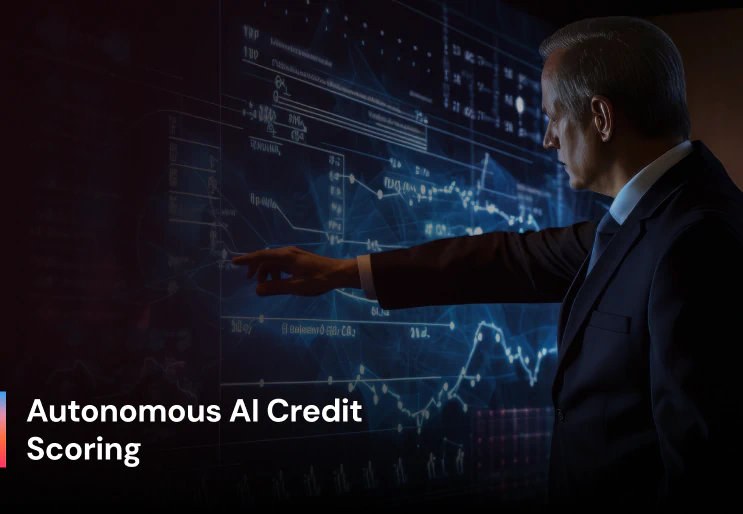
AI in Credit Scoring: Replacing Heuristics with Autonomous Intelligence

For decades, credit scoring has relied heavily on rigid heuristics, fixed rules like income thresholds, credit history length, or debt-to-income ratios. While these rules have served as a baseline for financial risk assessment, they often fail to account for real-world complexity, especially in emerging markets or for first-time borrowers.

Today, with advances in AI and agent-based intelligence, credit scoring is undergoing a fundamental transformation, moving from static rule sets to dynamic, self-learning systems that analyze far more than just traditional credit data.


The Problem with Heuristic-Based Scoring

Heuristic models are:

  • Overly simplistic – Based on limited, often outdated variables.
  • Biased – Prone to systemic discrimination based on race, location, or employment history.
  • Static – Rules don’t evolve with market conditions or borrower behavior.
  • Exclusionary – Leave out large populations such as gig workers, new-to-credit users, and small business owners.

In a data-rich world, these approaches are no longer sufficient or fair.


AI-Powered Credit Scoring: A Paradigm Shift

Modern AI-based systems leverage:


  • Machine learning models that analyze patterns across hundreds of variables.
  • Alternative data sources like mobile payments, utility bills, social behavior, and transaction histories.
  • Agentic AI that simulates human-like reasoning, adapts in real-time, and learns continuously.

The result? Context-aware, unbiased, and highly adaptive credit scoring models that evolve with each new data point.


How Agentic Intelligence Changes the Game


Autonomous Decisioning Agents

These agents evaluate creditworthiness in real-time by combining structured data (e.g., bank statements, salary slips) with unstructured data (e.g., spending behavior, digital footprint).

Self-Learning Feedback Loops

Agents learn from outcomes — approved loans that default, rejected loans that would’ve succeeded — to constantly improve scoring accuracy.

Multimodal Data Processing

Credit agents can process:

  • Transaction logs
  • Call records (telco)
  • Behavioral analytics from apps
  • Geolocation trends

This allows the inclusion of credit-invisible populations who previously had no score.

Transparent Decisioning

Agentic AI can explain why a decision was made, breaking down feature contributions and providing audit-ready justifications.

Challenges and Considerations

  • Data Privacy – Must comply with local and global data regulations (e.g., GDPR).
  • Model Explainability – Black-box AI must be avoided in high-stakes finance.
  • Bias Mitigation – Constant monitoring to avoid reinforcing existing inequalities.

With responsible implementation, AI in credit scoring can become not just more accurate, but also more ethical.


Conclusion: Toward an Inclusive, Adaptive Credit Ecosystem

Replacing heuristics with AI-powered, autonomous credit scoring is not just an upgrade it’s a fundamental leap forward.

With agentic intelligence, financial institutions can make credit more:

  • Inclusive
  • Real-time
  • Transparent
  • Predictive

The future of credit isn’t rule-based; it’s intelligent, learning, and human-aware.


Building Self-Driven Bots for Reconciliation and Financial Reporting

Manual reconciliation, delayed closing cycles, and data mismatches continue to weigh down finance teams across industries. While traditional RPA tools have helped automate some tasks, they often fail when faced with inconsistencies, missing references, or changing data formats.

That’s where self-driven bots, powered by Agentic AI and intelligent automation, come into play. They offer not just task execution but goal-oriented, context-aware financial processing.

The Problem with Traditional Financial Automation

Many finance functions still rely on:

  • Rule-based bots that break with slight data variation,
  • Manual exception handling in reconciliations,
  • Separate systems for accounting, banking, and compliance,
  • Limited visibility and traceability across workflows.

The result?

Delays in closing books, compliance risks, and excessive manual effort.


What Are Self-Driven Bots?

Self-driven bots are autonomous digital agents that:

  • Understand financial documents (e.g., bank statements, ledgers, invoices),
  • Match and reconcile data from multiple systems,
  • Make decisions based on pre-defined goals and learned context.
  • Escalate exceptions with recommendations,
  • Learn from outcomes to reduce future errors.

They go beyond following static rules; they adapt, learn, and collaborate to achieve complete financial accuracy.

Key Capabilities of Self-Driven Finance Bots

Bank Reconciliation

  • Extracts entries from ERP and bank statements.
  • Matches transactions using intelligent matching logic (fuzzy logic, ML models).
  • Flags unmatched or suspicious entries with reason codes.
  • Suggests journal entries or auto-posting where confidence is high.

Ledger Consolidation

  • Aggregates data from multiple ledgers (subsidiaries, countries, currencies).
  • Normalizes formats and aligns with financial reporting standards.
  • Supports IFRS/GAAP compliance via configurable templates.

Real-Time Financial Dashboards

  • Self-updating dashboards with close-status, reconciliation progress, and exception trends.
  • Tracks SLAs, escalations, and audit trails.

Exception Management with Human-in-the-Loop

  • Escalates unresolved issues with full context (e.g., missing PO, duplicate invoice).
  • Allows finance staff to validate, override, or correct with one click.
  • Learns from user action to improve accuracy.

How It Works: Agentic Workflow in Finance

  1. Ingestion Agent: Pulls data from ERP, core banking, spreadsheets, and external APIs. 
  2. Reconciliation Agent: Applies matching logic, identifies variances, and proposes actions. 
  3. Approval Agent: Seeks validations for high-value or complex exceptions. 
  4. Reporting Agent: Updates financial dashboards and triggers alerts or reports. 
  5. Learning Agent: Captures actions and outcomes to refine logic over time.

These agents operate in parallel, communicate, and continuously learn, creating a resilient and autonomous reconciliation engine.


Conclusion: Finance Teams Need More Than Tools; They Need Autonomous Systems

As financial operations become more complex, traditional tools fall short. Self-driven bots built on intelligent, agent-based architecture offer a future where:

  • Reconciliation is real-time,
  • Reporting is instant and accurate,
  • And finance teams focus on strategy, not spreadsheets.

The future of finance isn’t just automated, it’s self-driven, intelligent, and always on.


Transforming Customer Support in Insurance with Conversational AI

Insurance has long been viewed as a complex and paperwork-heavy industry, where customer support often means long wait times, limited availability, and impersonal responses. However, in today’s digital-first world, policyholders expect instant, seamless, and human-like interactions available 24/7 and across their preferred channels.

That expectation is pushing insurers to rethink how support is delivered.

Conversational AI is emerging as a transformational technology delivering context-aware, intelligent, and scalable customer service that bridges the gap between automation and human empathy.


What Is Conversational AI in Insurance?

Conversational AI refers to AI-driven systems (often chatbots or voice bots) that use natural language processing (NLP), machine learning, and dialogue management to understand and respond to user queries in a human-like manner.

In the insurance industry, these AI assistants can perform a wide range of tasks:

  • Answering policyholder FAQs
  • Helping users file and track claims
  • Updating personal or policy information
  • Notifying about renewals or premium due dates
  • Collecting documents or KYC information
  • Escalating complex cases to human agents

What sets modern Conversational AI apart is its ability to understand context, intent, and emotion, and to personalize interactions in real time.


Key Capabilities That Make It Work

Here’s a deeper look at the core capabilities driving Conversational AI in insurance:


1. Natural Language Understanding (NLU)

Conversational AI understands not just keywords, but intent and context. Whether a customer types “I lost my ID card” or “Need help with reissuing policy docs,” the AI understands the underlying intent and triggers the right workflow.

2. Omnichannel Integration

Support is no longer tied to call centers. Conversational AI works across WhatsApp, mobile apps, websites, IVR systems, and even voice assistants—offering a consistent and continuous experience no matter where the customer engages.

3. Back-End System Connectivity

Through API integration, bots connect to policy management systems, CRM, document repositories, and payment gateways—allowing real-time data retrieval and actions like premium payments or claims registration.

4. Adaptive Dialogues & Learning

Advanced AI models use reinforcement learning to adapt over time. If users drop off frequently at a specific step, the bot can optimize that part of the flow to improve experience and retention.

5. Multilingual Support

To serve diverse populations, bots support local languages and dialects, both in text and voice enabling deeper market penetration and inclusivity in regional markets.


Where Conversational AI Delivers Value

Conversational AI enhances every stage of the insurance journey. In pre-sales, it answers product questions and generates instant quotes. During onboarding, it collects documents and guides users through forms.

Once a policy is active, AI assistants handle updates, premium queries, and document requests.

For claims, they manage FNOL submissions, provide real-time status updates, and collect required information.

At renewal time, the bot sends reminders, explains options, and enables quick payments. And throughout the customer lifecycle, it offers 24/7 support—resolving queries, logging feedback, and escalating issues when needed.


Behind the Scenes: How AIRA Powers Conversational AI

At AIRA, our Agentic AI platform delivers enterprise-grade Conversational AI tailored to the insurance ecosystem:

  • Pre-trained intent libraries for life, health, motor, and general insurance
  • Smart fallback and escalation mechanisms to handle edge cases
  • Real-time analytics dashboards showing query categories, resolution rates, and drop-offs
  • Feedback loops that allow agents to train the AI on new intents with a no-code UI
  • Data security and compliance frameworks built for regulated industries

We don’t just build bots we deploy intelligent digital agents that support entire workflows and evolve with your business.


Real Benefits Beyond Just Automation

While automation is a key benefit, the real value lies in enhanced customer engagement and operational agility. Insurers that implement Conversational AI observe:

  • Fewer abandoned calls or tickets due to faster initial responses
  • Better first-time resolution (FTR) from consistent, accurate answers
  • Improved accessibility for non-tech-savvy or rural customers
  • Scalability during peak seasons (like natural disasters or policy renewal periods) without increasing headcount

It’s about doing more—with less effort—while meeting rising customer expectations.


The Future of Insurance Is Conversational

In the next phase of digital transformation, customer support will not be a department—it will be an experience delivered everywhere, instantly, and intelligently. Conversational AI will power that experience.

As insurers move from policy-centric to customer-centric operations, real-time, intelligent, and proactive communication will become a competitive differentiator.


Ready to Redefine Your Support Experience?

Let AIRA help you transform your insurance support with AI-powered, multilingual, always-on conversational agents.

???? Book a Demo | ???? Talk to Our Insurance AI Experts

Agentic AI in Insurance: From Quote to Claim Smarter, Faster, and Error-Free

In today’s competitive insurance landscape, customer expectations are soaring while operational margins are tightening. Customers demand instant quotes, paperless onboarding, real-time updates, and quick claim settlements but legacy systems and disconnected workflows still slow things down.

That’s where Agentic AI comes in.

Unlike traditional automation or rule-based bots, Agentic AI introduces autonomous, goal-oriented digital agents that don’t just follow workflows they understand intent, make decisions, and continuously learn. At Amantra, we’re using this new paradigm to help insurers reimagine the entire value chain from quote to claim.

What Makes Agentic AI Different?

Traditional automation solves isolated tasks. Agentic AI, by contrast:

  • Acts independently with a clear goal in mind
  • Understands context and adjusts decisions dynamically
  • Collaborates across systems and teams
  • Improves continuously through learning loops
  • Operates with transparency, traceability, and speed

These capabilities make Agentic AI ideal for insurance, where complex, exception-heavy processes demand intelligence not just efficiency.

The Insurance Lifecycle: Reimagined with Agentic AI

Here’s how Agentic AI transforms each stage of the insurance journey:

1. Smart Quotation & Underwriting

  • Conversational quote assistants engage users in natural language across channels (web, chat, voice)
  • AI agents analyze customer inputs and external data (demographics, vehicle info, health indicators, etc.)
  • Real-time risk profiling and instant quote generation
  • Underwriting agents validate documents and check eligibility automatically

2. Seamless Policy Issuance & Servicing

  • Intelligent document agents extract and verify KYC, proof of identity, and other compliance documents using IDP (Intelligent Document Processing)
  • Policy documents are generated, personalized, and dispatched without human intervention
  • AI tracks lifecycle events and proactively triggers actions (e.g., renewal reminders, policy updates)

3. Proactive Customer Support

  • AI agents act as 24×7 virtual insurance advisors, answering customer queries in real time
  • Escalations are routed based on sentiment, urgency, and context
  • Omnichannel integration ensures a consistent support experience across touchpoints


4. Fast-Tracked Claims Adjudication

  • AI agents receive and classify First Notice of Loss (FNOL) submissions via multiple formats (text, voice, images)
  • Claims data is matched against policy terms, external data (weather, accident reports), and historical behavior
  • Real-time fraud checks and intelligent routing for quick approvals or escalations
  • Automated communication keeps policyholders updated at each stage 

Why It Matters

In insurance, every delay costs trust. Every manual step introduces risk. Every disconnected workflow creates friction.

With Agentic AI, insurers can now operate at machine scale while delivering human-grade experiences at every touchpoint. It’s not just automation it’s evolution.


Ready to Transform Your Insurance Journey?

Let Amantra show you how Agentic AI can make your operations smarter, faster, and error-free from quote to claim.

Book a DemoTalk to Our Insurance AI Experts


Agentic Workflows in Trade Finance: Automating Document Intelligence

Trade finance is one of the most document-heavy areas of banking, involving layers of paperwork, regulatory scrutiny, and cross-border compliance. From letters of credit and bills of lading to invoices and inspection certificates, each document must be verified, matched, and processed with precision.

Traditionally, this has meant manual data entry, document cross-checking, and delays increasing the operational burden on banks and slowing down global trade cycles.

But with the emergence of Agentic AI, a new generation of intelligent automation is transforming trade finance. At Amantra, we enable agentic workflows that go beyond RPA and OCR delivering systems that can reason, adapt, and make decisions autonomously.


The Document Problem in Trade Finance

Trade finance processes are plagued by:

  • Unstructured, multi-format documents (PDFs, scans, emails)
  • Manual verification of fields like quantity, origin, consignee, port, etc.
  • Error-prone matching across systems and stakeholders
  • Regulatory compliance that varies across jurisdictions
  • Slow turnaround times impacting client satisfaction and capital liquidity

Even with partial digitization, much of the intelligence still rests with human operators.

What Are Agentic Workflows?

Agentic Workflows are powered by AI agents self-directed, context-aware digital workers that operate with intent. Unlike rule-based bots, Agentic AI systems can:

  • Interpret complex document types
  • Apply dynamic logic based on trade rules or customer profiles
  • Collaborate with humans when needed
  • Learn from past interactions
  • Initiate follow-ups or corrections autonomously

This is automation that acts with purpose not just following instructions, but understanding outcomes.


How Amantra Enables Document Intelligence in Trade Finance

Amantra integrates Agentic AI into trade finance operations by embedding intelligence into the core of document processing:

  1. Smart Ingestion & Classification:Our system extracts data from varied formats scanned images, handwritten notes, email attachments using advanced IDP (Intelligent Document Processing) and Generative AI models.
  2. Contextual ValidationAgentic bots don’t just extract data; they understand context verifying country of origin, shipment value, or Incoterms automatically against expected criteria and trade policies.
  3. Intelligent MatchingThe agents reconcile fields across multiple documents (e.g., matching invoice to purchase order, bill of lading to letter of credit) and flag discrepancies learning from historical patterns and prior decisions.
  4. Exception Handling & EscalationWhen anomalies or compliance issues arise, the AI agent collaborates with human teams, offering recommendations and logging resolution paths for continuous learning.
  5. Audit Trail & Regulatory ReportingEvery action is traceable. AIRA logs document lineage, decision logic, and validation checkpoints making audit and compliance seamless.


From Document Chaos to Intelligent Trade Workflows

Trade finance is a critical lever for global commerce but its complexity demands more than basic automation. With Agentic AI, institutions gain a workforce that is always-on, learning-driven, and compliance-ready.

At AIRA, we’re enabling banks to shift from document processors to intelligent orchestrators of trade.

Let’s Rethink Trade Document Processing.

Unlock speed, accuracy, and intelligence across your trade finance operations.


Book a Demo | Talk to Our Trade Automation Experts

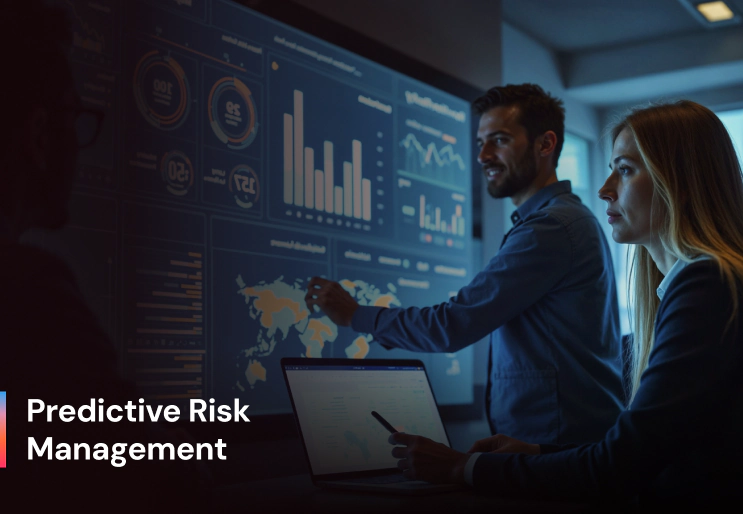
Predictive Risk Management: AI Models That See Beyond Spreadsheets

Risk is no longer just a number on a spreadsheet it’s dynamic, interconnected, and constantly evolving. Traditional risk management methods, which rely heavily on historical data and static reports, often fail to detect the early signs of financial distress, fraud, operational failure, or market shifts.

To stay resilient in today’s volatile environment, financial institutions need more than hindsight they need foresight. And that’s where AI-driven predictive risk management comes into play.

At Amantra, we’re helping organizations shift from reactive risk reporting to proactive risk prediction powered by intelligent models that learn from vast data sets, uncover hidden patterns, and deliver early warning signals that spreadsheets simply can’t.

The Limitations of Spreadsheet-Based Risk Management

Spreadsheets are still the backbone of risk reporting for many institutions. But they come with critical flaws:

  • Lagging indicators based on historical data
  • Manual data entry and formula-based errors
  • Inability to scale with high-volume, real-time inputs
  • Lack of contextual understanding
  • Limited scenario planning and forecasting capabilities

In short, spreadsheets are great for documenting risk—but not for managing it dynamically.


How AI Models Are Transforming Risk Management

Predictive AI models combine machine learning, statistical analysis, and contextual intelligence to deliver continuous, real-time risk insights. Here’s how they work:

  1. Dynamic Data Ingestion
    AI systems ingest and process structured (e.g., transactions, ledgers) and unstructured data (e.g., news, emails, voice logs) in real time, offering a holistic view of emerging risks.
  2. Pattern Recognition & Anomaly Detection
    Machine learning algorithms uncover subtle trends and deviations flagging anomalies that might indicate fraud, credit deterioration, liquidity stress, or operational threats.
  3. Risk Scoring & Forecasting
    AI continuously scores risk at the transaction, customer, and portfolio level projecting future risk exposure under various macroeconomic and business scenarios.
  4. Explainability & Traceability
    With explainable AI (XAI), risk decisions are no longer black boxes. AI models provide transparent justifications, improving trust with regulators and internal stakeholders.
  5. Automated Action Triggers
    Smart workflows enable real-time responses whether it’s flagging a high-risk transaction, adjusting a credit limit, or notifying compliance teams.


Amantra’s Predictive Risk Management Capabilities

At Amantra, we deliver an intelligent risk management framework that integrates:

    • Credit risk models tailored to real-time borrower behavior
    • Operational risk dashboards with live KPI tracking
    • Fraud detection engines using graph-based ML
    • Early warning systems for customer churn, payment defaults, or market events
    • Customizable alerts and playbooks for automated decision-making

From Reactive to Predictive: A New Era of Risk Strategy

Predictive risk management isn’t just about technology it’s a mindset shift. It’s about empowering your teams with data-driven foresight, automating the noise, and focusing human attention where it matters most.

In a world of uncertainty, AI doesn’t just help you respond to risk it helps you stay ahead of it.


Ready to See Beyond Spreadsheets?

Let Amantra help you build an adaptive, predictive, and future-ready risk management system.

Book a Demo | Talk to Our Risk AI Experts

How Gen AI Is Enhancing Customer Onboarding & KYC in Financial Institutions

In a world where digital expectations are rising and regulatory scrutiny is intensifying, the customer onboarding and KYC process has become a critical and often painful touchpoint in financial services. Lengthy forms, fragmented identity checks, manual document reviews, and delayed account activations frustrate customers and burden compliance teams.

But Generative AI  is changing the game.

With the ability to understand, reason, converse, and generate personalized outputs, Gen AI enables a new class of intelligent onboarding experiences—ones that are seamless for users and secure for institutions. At Amantra, we are leveraging Gen AI to make onboarding not just faster, but fundamentally smarter.

The Traditional KYC & Onboarding Pain Points

Despite years of digital transformation, onboarding workflows often suffer from:

  • Manual document verification and data extraction
  • Siloed systems and inconsistent identity checks
  • Inflexible forms that lead to drop-offs
  • One-size-fits-all experiences
  • Reactive compliance, not continuous monitoring

What Gen AI Brings to the Table

Generative AI supercharges onboarding by combining language understanding, reasoning, and dynamic content creation. Here’s how it enhances every step:

      1. Conversational OnboardingGen AI-powered chatbots guide users through onboarding in natural language—explaining terms, dynamically adjusting questions, and resolving doubts instantly. 
      2. Smart Document Understanding With Intelligent Document Processing powered by Gen AI, documents like passports, utility bills, and bank statements are read, validated, and classified in seconds automatically detecting anomalies or missing fields.
      3. Adaptive KYC Questionnaires Based on customer type, geography, and risk profile, Gen AI dynamically generates onboarding forms improving completion rates and reducing friction.
      4. Real-Time Risk Signals By analyzing language, document data, and behavioral patterns, Gen AI raises contextual alerts early in the journey detecting inconsistencies or fraud indicators.
      5. Continuous Learning for Compliance: As regulations evolve, Gen AI models adapt without manual rework—ensuring ongoing compliance and reduced exposure to risk.


Amantra’s Gen AI-Powered Onboarding Stack

At Amantra, we integrate Gen AI across the onboarding lifecycle:

  • Conversational Frontend (voice + text): Multilingual, interactive onboarding agents
  • IDP Engine: Gen AI-backed document ingestion and validation
  • KYC & AML Checks: Dynamic workflows based on data risk profiles
  • Human-in-the-Loop: Seamless handoff to compliance officers
  • Analytics Dashboard: Real-time visibility into onboarding SLAs and compliance metrics 

The Future of Onboarding Is Autonomous, Compliant & Customer-Centric

Gen AI isn’t just an efficiency booster it’s an experience revolution. It turns regulatory friction into a relationship-building opportunity, combining speed, security, and personalization.

As financial institutions move from static forms to intelligent journeys, Generative AI becomes the core enabler of KYC 2.0 faster, fairer, and future-ready.

Let’s Redefine Onboarding, Together.

Looking to modernize your KYC and customer onboarding with Generative AI and intelligent automation?

Book a Demo | Talk to Our Onboarding Transformation Experts

Smart Compliance in Banking: Using ML to Detect Anomalies in Real-Time

In the high-stakes world of financial services, compliance isn’t just a checkbox it’s a moving target. Regulations evolve, transactions surge, and risks hide in plain sight. Traditional compliance systems, built on static rules and manual reviews, are no longer equipped to keep up.

Enter machine learning (ML) the game-changer transforming how banks detect anomalies and enforce compliance in real-time. At AIRA, we’re helping financial institutions upgrade from reactive systems to intelligent, proactive monitoring that learns, adapts, and acts at machine speed.

Why Traditional Compliance Monitoring Falls Short

Legacy compliance systems often rely on:

  • Hardcoded rules (e.g., transaction thresholds)
  • Batch-based checks that delay issue detection
  • High false positives, burdening compliance teams
  • Minimal contextual awareness

As fraudsters and compliance risks grow more sophisticated, rule-based systems generate overwhelming alerts while still missing subtle, high-risk behaviors.

How Machine Learning Enables Smart Compliance

Machine learning adds a new dimension to compliance: the ability to detect the unexpected. Here’s how:

1. Real-Time Pattern Recognition

ML models continuously analyze transactional data to identify patterns and deviations. Whether it’s an unusual sequence of transfers or outlier behavior in a customer’s transaction profile, anomalies are flagged immediately.

2. Behavioral Profiling

ML creates dynamic profiles for customers, vendors, and accounts. It learns what’s normal for each entity and alerts only when behavior deviates significantly from the norm.

3. Drastically Reduced False Positives

Smart compliance systems can filter out noise, helping teams focus on high-probability risks. This reduces alert fatigue and improves investigation efficiency.

Amantra’s ML-Driven Compliance Framework

At Amantra, we integrate machine learning models across compliance workflows to create a smart, real-time monitoring ecosystem:

  • Anomaly Detection Engine: Continuously scans transactions, communications, and logs for red flags using unsupervised learning models.

  • Automated Case Creation: When anomalies are flagged, Amantra automatically creates investigation cases, attaches relevant data, and routes them to compliance analysts.

  • Explainable AI (XAI): Every decision is transparent—Amantra explains why an alert was triggered, making audits and regulatory reporting seamless.

  • Feedback Loops: Analyst inputs continuously train the model, improving detection accuracy over time.


Real-World Results

Banks using Amantra’s ML-powered compliance solutions have reported:

  • 50–70% reduction in false positives
  • Faster alert triaging and resolution
  • Improved fraud detection rates
  • Enhanced regulatory confidence and audit readiness

From Reaction to Prediction

Compliance no longer needs to wait for something to go wrong. With ML, banks can predict and prevent violations in real-time, ensuring a stronger control environment and a safer customer experience.

In an era where regulatory pressure and cyber risks are at an all-time high, Smart Compliance isn’t optional it’s essential.


Ready to Future-Proof Your Compliance Strategy?

Explore how Amantra’s machine learning solutions can make your compliance operations smarter, faster, and more resilient.

Book a Demo   |  Talk to Our Compliance Automation Experts

How RPA and Artificial Intelligence are Used in Intelligent Process Automation

Understanding RPA and AI

Robotic Process Automation (RPA) and Artificial Intelligence (AI) are integral components of
Intelligent
Process Automation (IPA), enhancing business operations through automation, efficiency, and
strategic
decision-making. Here’s a detailed look at how RPA and AI work together in the context of
Intelligent Process Automation:

Understanding RPA and AI

Robotic Process Automation (RPA):

  • Purpose: RPA is designed to automate repetitive, rule-based tasks
    traditionally
    performed by humans. It
    operates by using software robots or AI Agents to execute tasks within existing applications
    and
    systems.
  • Benefits: RPA offers immediate cost savings and efficiency gains by
    reducing
    human
    error, speeding up
    processes, and allowing employees to focus on higher-value activities.
  • Applications: It is effective in scenarios where tasks follow clear,
    rule-based
    processes, such as data
    entry, form filling, and repetitive data processing tasks.

Artificial Intelligence (AI):

  • Purpose: AI extends automation capabilities by enabling systems to learn,
    adapt, and make decisions
    based on data. It includes technologies like machine learning, natural language processing
    (NLP), and
    cognitive computing.
  • Benefits: AI enhances decision-making, predicts outcomes, and processes
    unstructured data, which RPA
    alone cannot handle effectively.
  • Applications: AI is used for data analysis, pattern recognition, customer
    service automation, and more
    complex tasks that require learning from data and context.

Integration of RPA and AI in Intelligent Process Automation

Enhanced Automation Capabilities:

  • Synergy: RPA and AI complement each other: RPA automates structured tasks,
    while AI handles
    cognitive functions like natural language understanding and pattern recognition.
  • Use Cases: Combining RPA with AI enables businesses to automate end-to-end
    processes that involve
    both structured and unstructured data. For example, AI can analyze customer inquiries
    (unstructured
    data) and RPA can automate responses or initiate follow-up actions based on AI-driven insights.

Process Mining and Optimization:

  • AI in Process Mining: AI algorithms can analyze vast amounts of process data to
    identify
    inefficiencies, bottlenecks, and opportunities for improvement. This data-driven approach helps
    optimize processes before automation.
  • RPA Implementation: RPA can then be strategically applied to automate
    identified processes, ensuring
    efficiency gains and compliance with optimized workflows.

Scalability and Flexibility:

  • Scalability: RPA combined with AI allows for scalable automation solutions that
    can adapt to varying
    workload demands and business needs.
  • Flexibility: AI capabilities such as machine learning enable adaptive
    automation, where processes
    can learn and evolve based on changing conditions and new data insights.

Benefits of Intelligent Process Automation (IPA)

  • Cost-Effective Automation: IPA combines the cost-effectiveness of RPA with the
    intelligence of AI,
    providing a robust automation framework that delivers quick returns on investment.
  • Improved Decision-Making: AI-driven insights enhance decision-making processes
    by providing accurate
    data analysis and predictive capabilities.
  • Enhanced Customer Experience: Automating processes with IPA can lead to faster
    response times,
    personalized interactions, and improved customer satisfaction.

Conclusion

Intelligent Process Automation, leveraging both RPA and AI, represents the future of efficient,
scalable, and intelligent business operations. By integrating these technologies strategically,
organizations can achieve significant operational efficiencies, reduce costs, and deliver superior
customer experiences. As businesses continue to prioritize digital transformation, IPA will play a
crucial role in driving innovation and competitiveness in the marketplace.

Is Hyper-Automation a New Solution for Cybersecurity?

Robotic Process Automation (RPA) and Artificial Intelligence (AI) are integral components of
Intelligent
Process Automation (IPA), enhancing business operations through automation, efficiency, and
strategic
decision-making. Here’s a detailed look at how RPA and AI work together in the context of
Intelligent
Process Automation:

Understanding RPA and AI

Robotic Process Automation (RPA):

  • Purpose: RPA is designed to automate repetitive, rule-based tasks
    traditionally
    performed by humans. It
    operates by using software robots or AI Agents to execute tasks within existing applications
    and
    systems.
  • Benefits: RPA offers immediate cost savings and efficiency gains by
    reducing
    human
    error, speeding up
    processes, and allowing employees to focus on higher-value activities.
  • Applications: It is effective in scenarios where tasks follow clear,
    rule-based
    processes, such as data
    entry, form filling, and repetitive data processing tasks.

Artificial Intelligence (AI):

  • Purpose: AI extends automation capabilities by enabling systems to learn,
    adapt, and make decisions
    based on data. It includes technologies like machine learning, natural language processing
    (NLP), and
    cognitive computing.
  • Benefits: AI enhances decision-making, predicts outcomes, and processes
    unstructured data, which RPA
    alone cannot handle effectively.
  • Applications: AI is used for data analysis, pattern recognition, customer
    service automation, and more
    complex tasks that require learning from data and context.

Integration of RPA and AI in Intelligent Process Automation

Enhanced Automation Capabilities:

  • Synergy: RPA and AI complement each other: RPA automates structured tasks,
    while AI handles
    cognitive functions like natural language understanding and pattern recognition.
  • Use Cases: Combining RPA with AI enables businesses to automate end-to-end
    processes that involve
    both structured and unstructured data. For example, AI can analyze customer inquiries
    (unstructured
    data) and RPA can automate responses or initiate follow-up actions based on AI-driven insights.

Process Mining and Optimization:

  • AI in Process Mining: AI algorithms can analyze vast amounts of process data to
    identify
    inefficiencies, bottlenecks, and opportunities for improvement. This data-driven approach helps
    optimize processes before automation.
  • RPA Implementation: RPA can then be strategically applied to automate
    identified processes, ensuring
    efficiency gains and compliance with optimized workflows.

Scalability and Flexibility:

  • Scalability: RPA combined with AI allows for scalable automation solutions that
    can adapt to varying
    workload demands and business needs.
  • Flexibility: AI capabilities such as machine learning enable adaptive
    automation, where processes
    can learn and evolve based on changing conditions and new data insights.

Benefits of Intelligent Process Automation (IPA)

  • Cost-Effective Automation: IPA combines the cost-effectiveness of RPA with the
    intelligence of AI,
    providing a robust automation framework that delivers quick returns on investment.
  • Improved Decision-Making: AI-driven insights enhance decision-making processes
    by providing accurate
    data analysis and predictive capabilities.
  • Enhanced Customer Experience: Automating processes with IPA can lead to faster
    response times,
    personalized interactions, and improved customer satisfaction.

Conclusion

Intelligent Process Automation, leveraging both RPA and AI, represents the future of efficient,
scalable, and intelligent business operations. By integrating these technologies strategically,
organizations can achieve significant operational efficiencies, reduce costs, and deliver superior
customer experiences. As businesses continue to prioritize digital transformation, IPA will play a
crucial role in driving innovation and competitiveness in the marketplace.

How to Create a Process Document That Will Save your Time

Challenges

Challenges in Invoice Processing Workflow

The manufacturing company faced several significant challenges in its invoice processing workflow:
  • Diverse Invoice Formats: Invoices received from multiple vendors came in various formats, necessitating extensive manual data entry. This diversity in formats made it difficult to standardize the process, leading to inefficiencies and inconsistencies.
  • Time-Consuming Processes: The manual data entry process was highly time-consuming. Employees had to spend considerable hours inputting data, which delayed the overall workflow and impacted the company’s operational efficiency.
  • Risk of Human Errors: Manual processing increased the likelihood of human errors. Mistakes in data entry could lead to inaccurate invoices, jeopardizing vendor relationships and potentially resulting in financial losses.
  • Complex Approval Processes: Hierarchical approval processes added another layer of complexity to the invoice processing workflow. The need for multiple approvals slowed down the process, exacerbating inefficiencies and impeding the company’s agility in responding to vendor inquiries and processing payments.

Artificial Intelligence (AI):

  • Purpose: AI extends automation capabilities by enabling systems to learn,
    adapt, and make decisions
    based on data. It includes technologies like machine learning, natural language processing
    (NLP), and
    cognitive computing.
  • Benefits: AI enhances decision-making, predicts outcomes, and processes
    unstructured data, which RPA
    alone cannot handle effectively.
  • Applications: AI is used for data analysis, pattern recognition, customer
    service automation, and more
    complex tasks that require learning from data and context.

Integration of RPA and AI in Intelligent Process Automation

Enhanced Automation Capabilities:

  • Synergy: RPA and AI complement each other: RPA automates structured tasks,
    while AI handles
    cognitive functions like natural language understanding and pattern recognition.
  • Use Cases: Combining RPA with AI enables businesses to automate end-to-end
    processes that involve
    both structured and unstructured data. For example, AI can analyze customer inquiries
    (unstructured
    data) and RPA can automate responses or initiate follow-up actions based on AI-driven insights.

Process Mining and Optimization:

  • AI in Process Mining: AI algorithms can analyze vast amounts of process data to
    identify
    inefficiencies, bottlenecks, and opportunities for improvement. This data-driven approach helps
    optimize processes before automation.
  • RPA Implementation: RPA can then be strategically applied to automate
    identified processes, ensuring
    efficiency gains and compliance with optimized workflows.

Scalability and Flexibility:

  • Scalability: RPA combined with AI allows for scalable automation solutions that
    can adapt to varying
    workload demands and business needs.
  • Flexibility: AI capabilities such as machine learning enable adaptive
    automation, where processes
    can learn and evolve based on changing conditions and new data insights.

Benefits of Intelligent Process Automation (IPA)

  • Cost-Effective Automation: IPA combines the cost-effectiveness of RPA with the
    intelligence of AI,
    providing a robust automation framework that delivers quick returns on investment.
  • Improved Decision-Making: AI-driven insights enhance decision-making processes
    by providing accurate
    data analysis and predictive capabilities.
  • Enhanced Customer Experience: Automating processes with IPA can lead to faster
    response times,
    personalized interactions, and improved customer satisfaction.

Conclusion

Intelligent Process Automation, leveraging both RPA and AI, represents the future of efficient,
scalable, and intelligent business operations. By integrating these technologies strategically,
organizations can achieve significant operational efficiencies, reduce costs, and deliver superior
customer experiences. As businesses continue to prioritize digital transformation, IPA will play a
crucial role in driving innovation and competitiveness in the marketplace.