November 5th 2025, 5:19 am
Real-Time Inventory Tracking and Replenishment via Agentic AI
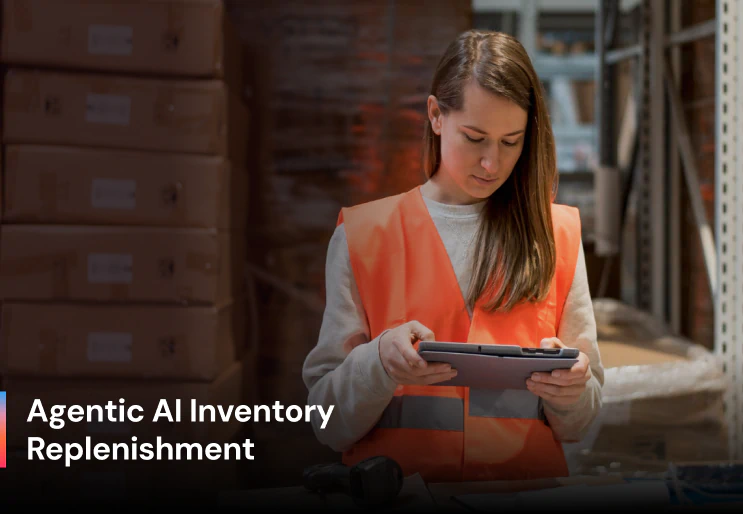
In today’s fast-paced business environment, the speed at which organizations can sense, decide, and act on inventory needs often determines profitability and customer satisfaction. Traditional inventory management methods relying on periodic updates, manual monitoring, or static ERP rules struggle to keep up with dynamic market demands.
Enter Amantra Agentic AI: autonomous, decision-making agents that transform inventory management into a real-time, self-correcting system.
Why Real-Time Inventory Tracking Matters
Inventory challenges are not new. Overstocking locks up capital, understocking leads to lost sales, and inaccurate data can ripple across the supply chain. For industries like retail, manufacturing, and logistics, these issues translate directly into higher operating costs and missed opportunities.
What’s different now is the urgency of real-time visibility. Customers expect instant product availability, suppliers are global and complex, and disruptions from supply chain delays to sudden demand spikes are more frequent. Businesses need systems that don’t just record inventory but actively manage it in real-time.
The Role of Agentic AI in Inventory Management
Unlike traditional automation, Agentic AI doesn’t just follow predefined rules it reasons, predicts, and acts autonomously. Think of it as having a team of digital operations managers continuously monitoring inventory flows, making decisions, and triggering actions.
Here’s how it works:
- Continuous Monitoring – AI agents integrate with POS systems, IoT-enabled shelves, ERP, and supplier databases to track stock levels in real time.
- Predictive Intelligence – Using historical trends, seasonal data, and external signals (such as weather or promotions), agents forecast demand fluctuations before they occur.
- Autonomous Replenishment – When stock drops below safe levels, agents automatically trigger reorders, optimize order quantities, and even negotiate with suppliers through integrated workflows.
- Cross-System Orchestration – Agents seamlessly connect procurement, warehousing, and logistics, ensuring replenishment is aligned across the entire value chain.
Key Benefits
- Reduced Stockouts and Lost Sales: Customers always find what they need, boosting loyalty.
- Lower Carrying Costs: Smart agents optimize stock to reduce excess inventory.
- Faster Response to Disruptions: Agents detect anomalies like shipment delays and dynamically reroute orders.
- Scalability: Whether managing 100 SKUs or 100,000, Agentic AI scales without increasing headcount.
Beyond Tracking: Towards Autonomous Supply Chains
Real-time inventory management is just the beginning. With Agentic AI, organizations can move toward fully autonomous supply chains where intelligent agents work collaboratively to handle forecasting, replenishment, procurement, and logistics. This shift not only reduces inefficiencies but also unlocks agility in responding to market shifts, customer demands, and global disruptions.
Conclusion
Real-time inventory tracking and replenishment via Agentic AI isn’t just an upgrade; it’s a fundamental shift in how enterprises operate. By combining real-time data, predictive intelligence, and autonomous action, businesses can eliminate costly inefficiencies, reduce risks, and deliver superior customer experiences.